Colorado HB 1113 Expands Uses for Low Input Turfgrass
During the 2025 legislative calendar a bill in Colorado was introduced to limit the amount of turf that can be installed on multi-dwelling and residential property. The legislation “Limit Turf in New Residential Development” (HB 1113) was introduced by Senator Dylan Roberts, Representative Karen McCormick and Representative Lesley Smith on January 27th and referred to the House Committee on Agriculture, Water and Natural Resources.
As introduced, the legislation beginning January 1, 2028, would prohibit the installation of non-functional turf on new residential property development. Colorado defines functional turf as:
“Located in a recreational use area or other space that is regularly used for civic, community, or recreational purposes, which may include playgrounds, sports fields, picnic grounds, amphitheaters, portions of parks, and the playing areas of golf courses, such as driving ranges, chipping and putting greens, tee boxes, greens, fairways, and roughs”
Turf not deemed functional is “non-functional.” Colorado is one of a handful of states that improperly defines “functional turf” based on where people are actively using the turf without acknowledging the multiple benefits and functions including:
- Soil stabilization
- Erosion prevention from wind or water
- Carbon sequestration
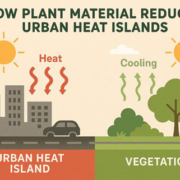
- Heat island mitigation
- Watershed buffer
- Pollutant capture and filter
- Community safety
HB 1113 comes one year after legislation was enacted to limit the installation of non- functional turf on commercial property. Which was negotiated by a host of stakeholders that reached an agreement on the types of areas that turf is not serving a significant function, like the strip between a sidewalk and curb or medians. During the discussions between stakeholders there was an agreement to avoid focusing on residential turf and the possibility of expanding the functional turf definition.
HB 1113 was debated by the Committee in February, with significant opposition coming from turf producers, landscape professionals and homeowners. There was also significant opposition among some Representatives on the Committee fearful of backlash from homeowners that want to have the right to plant turf in their yard. A deal was brokered between stakeholders to exempt the following types of turf from the residential restrictions. The following is exempt:
Turf that is:
-
-
- A native plant
- Has been hybridized for arid conditions; or
- A low-water grass
-
Significant advancements are being made with species of turf which are engineered for low water use or have been hybridized for arid conditions and use minimal resource inputs. While the definition of “functional turf” was not changed to include the tremendous benefits, it is progress that types of turf are being viewed as beneficial to the environment and Colorado homeowners and communities.
HB 1113 passed the Colorado House and is moving through the Senate with anticipation of passage prior to the end of the legislative session and then on to the Governor’s desk for enactment.