Florida Saved a Billion Gallons of Water by Changing One Habit: A Case Study
How simple communication grounded in behavioral science can save massive amounts of water – quickly, cheaply, and easily.
- Start saving sooner: Changing behavior with CBSM is easier than changing policy.
- Find water where it’s wasted: Target water waste based on a specific behavior – like running lawn sprinklers when it’s raining.
- For maximum impact: Use one simple message – “Skip a week” – and target one change in behavior – watering biweekly instead of weekly in winter.
- The ROI: SE Florida’s community-based social marketing campaign cost $0.60 per thousand gallons of water saved.
A few years ago, SW Florida ran a water-saving campaign called “Skip a week.”
It might seem like a simple message – and it is – but the goal was to save a lot of water quickly.
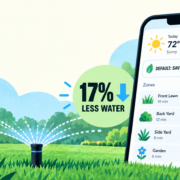
And it worked. The Southwest Florida Water Management District (SWFWMD) saved 1.2 billion gallons in four months just by asking homeowners to water their lawns half as often during the rainy season. To “skip a week,” as it were.
They picked one small behavior with a big impact on water waste, and created a clear messaging campaign that made it easy to change.
And the whole campaign cost $0.60 per thousand gallons saved.
Why SW Florida used Community-Based Social Marketing to save water
The short answer? They had a need for speed.
Here’s the background:
By 2009, southwest Florida was in its fourth year of drought. The District needed to extend its existing supply of water quickly.
How? Not with new laws and regulations, but by lowering unnecessary use. Where people use more water out of habit, rather than their actual irrigation needs.
Running lawn sprinklers in the rain, for example. Even with current water-use regulations and infrastructure in place, changing that behavior alone will save a ton of water – and probably a lot faster than implementing new policy.
Community-Based Social Marketing (CBSM) makes changing behavior a straightforward and repeatable process.
CBSM is a type of social marketing for a specific group of people. It meets people where they live, literally and psychologically.
CBSM focuses on three questions:
- Which specific behavior has the greatest impact?
- Who performs it?
- What barriers prevent changing that behavior?
Then it designs programs that remove those barriers individually.
How the Florida campaign worked on the ground
CBSM: Determine the single behavior change with the highest impact on water savings.
The District used behavioral research, focus groups, surveys, and pilot programs to determine which single change would have the biggest effect.
Irrigation habits were a good place to start. Consider this:
- Irrigation makes up two-thirds of household water use in parts of Florida
- Up to 50% of outdoor water use is wasted through runoff, evaporation, and overwatering
And in SW Florida, water use remained high even during rainy winter months – evidence of habit-driven irrigation rather than landscape need.
The target behavior: Overwatering in winter.
The target change: Skip a week. Water every other week from December through February.
The message is simple. And the goal is achievable, measurable, scientifically justifiable, and feels like common sense. Who can argue with watering less when it rains?
CBSM: Discover barriers to changing that behavior.
That said, information alone isn’t always enough to effect real change.
Importantly, focus groups allowed the District to identify barriers preventing people from actually adjusting their watering habits:
- Not knowing exactly when and how much to water, plus “set-and-forget” timer-based irrigation systems automated overwatering
- Concern over lawn health, and wanting to match neighbors’ yard appearance
- Concern about HOA penalties
- Fear that lawns would die
CBSM: Address those barriers directly with simple messaging.
- The campaign cited University of Florida research, a trusted local institution, showing that lawns need water only every 10-14 days, if at all, during the rainy season.
- It emphasized that overwatering harms lawns and reassured residents that brown grass is seasonally dormant, not dying.
- It brought HOAs into alignment to neutralize any threat of punishment for not conforming to neighborhood standards.
- It gave homeowners three simple visual cues they could check without technical knowledge or equipment to see if watering was actually needed:
- Grass blades folded in half lengthwise on at least one-third of the yard
- Grass blades appearing blue-gray
- Footprints remaining several minutes after walking on the lawn
CBSM: Deliver the message with trusted experts.
The District partnered with University of Florida IFAS extension offices, local utilities, master gardeners, and more than 1,300 homeowners’ associations.
The messengers mattered. Practical advice coming from familiar local institutions and peers felt safer than a generic conservation slogan. And getting HOAs on board removed the fear of punishment, fines, and peer judgment.
Why this simple and direct approach worked
People will act when they know exactly what to do and believe they will not be punished for doing it.
Florida didn’t save water by asking people to care more. It saved water by making the right choice easier, safer, and obvious.
What changed as a result of the campaign
The campaign’s results were documented in the District’s post-campaign evaluation and in an independent case study review by the California Water Efficiency Partnership.
The District calculated savings using the number of automatic irrigation systems, typical winter water use per system, and the measured increase in households skipping every other watering cycle.
After one winter season:
- 1.2 billion gallons of water were saved
- watering frequency fell from 3.1 to 1.8 times per month
- awareness of the Skip a Week message increased by more than 450%
- the belief that lawns require weekly watering year-round decreased by 19%
- manually turning off irrigation when not needed increased by 16%
- recognition that brown grass doesn’t always need water increased by 23%
- skipping irrigation every other week increased by 19%
Estimated campaign cost: ≈ $720,000
Cost efficiency: ≈ $0.60 per 1,000 gallons saved
Why this matters for policy and capital planning
Every utility is balancing the same pressures: climate, growth, aging systems, and cost. Florida’s experience suggests a simple order of operations.
- First, identify the lowest-effort, highest-impact behavior changes. Eliminate water use that isn’t necessary. Reducing waste with a CBSM initiative is faster than creating new policy, costs far less per gallon saved than rebates alone – and shrinks the problem rebates mean to solve.
- Capture those savings first. Then size the remaining capital needs to what still must be delivered, like rebates for things like replacing aging sprinklers, smart controllers, and new landscaping.
More expensive interventions go to where they are needed most – not to customers who overwater out of habit.
How to replicate this in your district
Target the right season. Check your data. If winter use exceeds 70% of summer use, you have Florida’s problem: habit-driven watering during rainy seasons. Stopping an unnecessary action takes less effort than reducing a necessary one.
Pre-test your messaging. Florida eliminated an ineffective skipping stones concept meant to mirror “Skip-a-Week” before spending on production. The final message included when (December-February), how often (every two weeks max), and why (grass biology).
Tell them what to do. Behavioral programs fail when the action requires too much cognitive load. Florida’s three visual signs worked because any homeowner could check them in 30 seconds.
Address social barriers first. Florida partnered with HOAs proactively. Can’t do formal partnerships? Identify neighborhoods with strict landscaping enforcement and give residents factual cover: “lawns naturally go dormant in winter without harm.”
Match tactics to barriers. Misconceptions: Myth-busting with credible research – Florida used University of Florida grass biology facts. Social pressure and punishment: Address HOA and neighborhood norms before individual outreach. Fear of subpar lawns: Provide simple ways to check when lawns actually need water instead of irrigating regardless of conditions.
Remember this:
Understanding people’s habits and how to change them is key to the future of water conservation management.
This case study shows that when guidance is specific, science-based, and socially supported, people change quickly. The gallons saved add up. And it costs a fraction of the time and money that more drastic interventions do, saving money for where it’ll have the most impact.
Go where the rubber meets the road. Learn how people actually make decisions about water, and design programs that meet them there.